
New Batches
Upcoming Batches Why Choose Onclick Digital Marketing Academy Onclick Digital Marketing Is Best Digital Marketing Training Institute In Hyderabad With 100% Placement Assistance 9+ Years
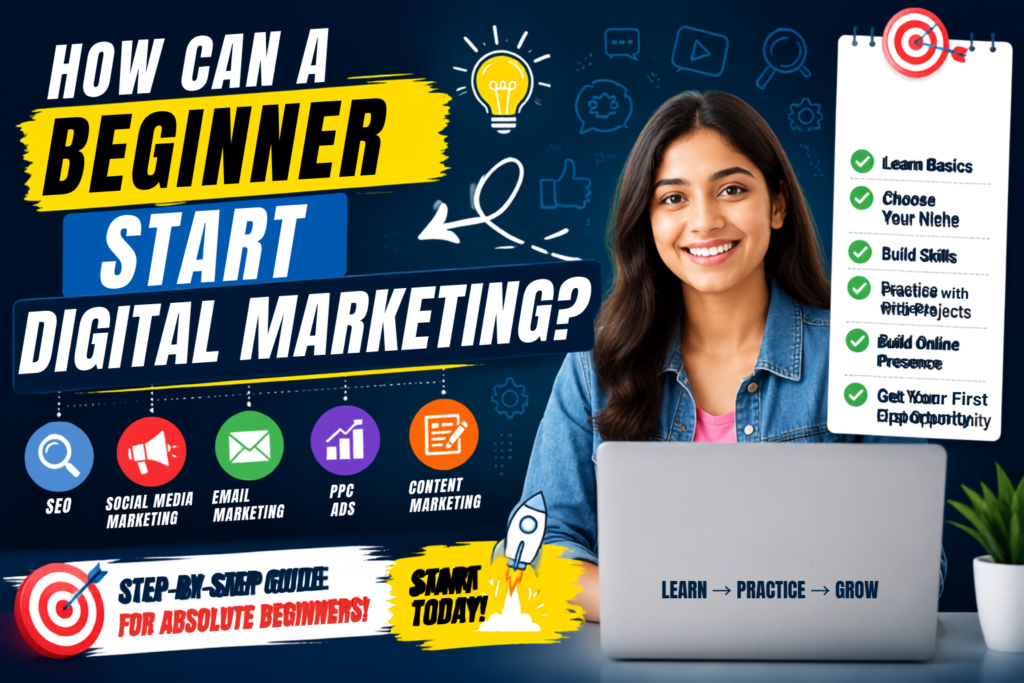
Most people who want to get into digital marketing have the same problem: they do not know where to start. There is so much content online YouTube videos, free courses, blog posts, paid programs and all of it tells you something slightly different. One person says start with SEO. Another says learn Facebook Ads first. Someone else swears you need to become a content creator before anything else. The truth is, none of that noise matters until you build the right foundation. Digital marketing is a broad field, but it follows a logical learning path. Once you understand the basics, everything else falls into place. This guide is written specifically for beginners people with zero experience who want a clear, honest answer to the question: how do I actually start? No fluff. No theory overload. Just a practical roadmap that works. First, Understand What Digital Marketing Actually Is. Before you start learning tools and tactics, you need a clear picture of the landscape. Digital marketing is not one single skill it is an umbrella term that covers several distinct disciplines, each with its own learning curve, tools, and career path.
You do not need to master all of these right away. Beginners should start broad, get a working understanding of each area, and then gradually specialise in one or two that align with their interests and career goals.
Step-by-Step Roadmap: How to Start Digital Marketing as a Beginner
A lot of beginners make the mistake of jumping straight into a specialisation before they understand the fundamentals. They try to learn Facebook Ads without knowing what a conversion funnel is, or they try to do SEO without understanding how search engines work.
Start by building a solid foundation in these core concepts:
These concepts are not exciting. But skipping them is exactly why most beginners spin their wheels for months without making real progress.
SEO teaches you how to think about content, keywords, user intent, and what people actually search for. These thinking skills transfer to every other area of digital marketing. Even if your end goal is to become a social media manager or run Facebook Ads, understanding SEO will make you a far sharper marketer.
Focus on these SEO basics first:
Spend three to four weeks on this. Read, watch tutorials, and most importantly practice on a real blog or website. Theory without application is almost useless in digital marketing.
This is where most beginners go wrong. They watch 40 hours of YouTube content, finish three free courses, and still feel like they have not learned anything. That is because watching is not the same as doing.
Once you have a grip on organic marketing, it is time to understand paid advertising. Paid ads amplify what already works. If you have a good offer and a clear audience, ads can scale results dramatically. If you have neither, ads will just burn your budget.
Choose one platform to start with based on your interest:
Do not try to learn all three at once. Pick one, run a few test campaigns, understand the metrics, make mistakes with a small budget, and learn from the data. That hands-on experience is worth more than any certification.
Digital marketing’s biggest advantage over traditional marketing is measurability. Every click, every scroll, every purchase can be tracked. But that data only helps you if you know how to read it.
Beginners should get familiar with:
You do not need to be a data scientist. But you do need to be comfortable looking at numbers, spotting patterns, and making decisions based on what the data tells you. This skill alone will put you ahead of most junior marketers.
One of the smartest things a beginner digital marketer can do is treat themselves as their first client. Start building your presence on LinkedIn. Share what you are learning. Write about mistakes you made and lessons you picked up. Document your projects. Engage with content from marketers you respect. Your personal brand does two things simultaneously. First, it forces you to practice writing, content strategy, audience building in a real environment. Second, it makes you visible to recruiters, clients, and collaborators who may never have found you otherwise. Some of the most successful freelance digital marketers in India built their entire client base through a consistent LinkedIn presence before they had a single formal credential to their name.
Common Mistakes Beginners Make (and How to Avoid Them)
Most beginners stumble in predictable ways. Knowing these pitfalls ahead of time saves you months of wasted effort. Trying to learn everything at once Digital marketing is broad. Pick one or two areas to go deep on before expanding.
You do not need expensive software to start. These free or freemium tools will cover most of what a beginner needs in their first six months:
Onclick Digital Marketing Academy Hyderabad
Reading about digital marketing is a start. But at some point, you need structured guidance, real campaign practice, and mentors who have done this work professionally not just in theory. That is what makes Onclick Digital Marketing Academy different from the hundreds of online tutorials and free courses you will find scattered across the internet. Our Digital Marketing Course in Hyderabad was designed from the ground up to take complete beginners and turn them into job-ready, client-ready digital marketing professionals. Every module is built around real campaigns, real tools, and real-world scenarios not textbook exercises. When you graduate, you will have a portfolio of actual work that proves your skills. Our Digital Marketing Training in Hyderabad is one of the most comprehensive programs available in the city, covering everything from the foundations of SEO and content marketing to advanced paid advertising, analytics, and AI-powered marketing tools.
Students from various backgrounds engineering graduates, MBA holders, homemakers returning to the workforce, business owners, and working professionals looking to switch careers have all gone through our Digital Marketing Course and come out the other side with real skills, real confidence, and real opportunities.
🎓Join Our Digital Marketing Course in Hyderabad Today!
Batches Filling Fast Reserve Your Seat Now!
Starting digital marketing as a beginner is not complicated but it does require the right approach. Get the fundamentals right first. Learn SEO before you worry about everything else. Build real projects as early as possible. Get hands-on with at least one paid advertising platform. Learn to read data. And build your personal brand while you grow. The biggest difference between people who succeed in digital marketing and those who burn out after a few months is simple: the successful ones take action before they feel ready, and they keep going when it gets confusing. The confusion is part of the process. Push through it.
If you want to shortcut the learning curve and do it with proper mentorship, structured training, and a community of fellow learners, Onclick Digital Marketing Academy in Hyderabad is the place to be. Our Digital Marketing Training in Hyderabad has helped hundreds of beginners go from knowing nothing to landing their first digital marketing role or their first freelance client. Your starting point does not matter. What matters is that you start.
Bussa Karthik Reddy is an experienced corporate trainer in Hyderabad, entrepreneur, and digital marketing expert with over 10 years in the industry. He focuses on professional training in Primavera P6, Microsoft Project, and BIM training. He helps students and professionals build strong careers in project management and construction technologies.
He founded Onclick Digital Marketing Services, JBK Academy, and Raster FX Studios. At these organizations, he provides job-oriented training in Hyderabad that emphasizes real-world skills, job placement support, and career growth. His skills also include lead generation through digital marketing, SEO strategies, and performance marketing. This makes him a well-rounded trainer in both technical and marketing fields. As a Digital Marketing Trainer in Hyderabad and HR Manager at MAAC Kukatpally, he has hands-on experience with student placement, recruitment, and career development. This dual role helps him understand what the industry needs and train students with practical skills that are relevant to the job market. With a strong passion for teaching, he has trained hundreds of students in BIM courses, project management tools, and digital marketing courses in Hyderabad. His aim is to help learners gain in-demand skills, improve their job prospects, and secure high-paying positions in competitive industries.

Upcoming Batches Why Choose Onclick Digital Marketing Academy Onclick Digital Marketing Is Best Digital Marketing Training Institute In Hyderabad With 100% Placement Assistance 9+ Years
Privacy Policy Welcome to Onclick Digital Marketing Academy. We value your privacy and are committed to protecting the personal information you share with us. This
Terms & Conditions Welcome to Onclick Digital Marketing Academy. By accessing our website, submitting an enquiry, enrolling in any of our training programs, or using
Loading… ISO Certification We Are Providing ISO Certification For Our Students. 15000+ Students We bring the right people together to challenge established thinking Accredited &
Loading… ISO Certification We Are Providing ISO Certification For Our Students. 15000+ Students We bring the right people together to challenge established thinking Accredited &
Master Digital Marketing Learn Industry-Ready Skills. Get Certified. Launch Your Career with Practical Training. Expert Trainers Learn from Industry Experts 100% Placement Assistance Explore Courses
Whatsapp Us Call : 9346775340 Get Brochure 2026 Curriculum AI Powered Become Job Ready with AI Powered Digital Marketing Course Join Hyderabad’s most trusted digital
Whatsapp Us Call : 9985023500 Get Brochure 2026 Curriculum AI Powered Become Job Ready with AI Powered Digital Marketing Course Join Hyderabad’s most trusted digital
Whatsapp Us Call : 9985023500 Enquiry Now #1 Digital Marketing Institute in Hyderabad Launch Your Digital Marketing Career with Performance Marketing, Real-Time Projects & 100%
Whatsapp Us Call : 9985023500 #1 Digital Marketing Institute in Hyderabad Launch Your Digital Career With Real-Time Projects & 100% Placement Assistance Master 15+ in-demand
Enroll Now Master Digital Marketing with AI & Build a Future-Proof Career Learn SEO, Google Ads, Social Media & AI Tools with Real-Time Projects +